Showing posts with label diy. Show all posts

Sunday, March 18, 2012

Do You Need To Replace Electrolyte in Your Car Battery?

Q: Just recently I had to replace my car battery. Some weeks before, my battery bracket loosened and the battery shifted, knocking off one of the caps, which I didn't know until I needed a jump. I put regular tap water inside and replaced the cap. Tap water was all I had at the time. After that the battery continued to weaken until it needed to be replaced. Could I had put any of the following substances in the battery to extend its life? Gatorade (powder or liquid), salt, saltwater, baking soda, sea water, or distilled water.


A: Anything on your list would have damaged your battery instantly. Battery electrolyte is sulfuric acid and water, and a certain amount of the lead electrolyte in solution. How much Lead? Depends on the state of charge of the battery, so the possibility of mixing up a concoction to replicate the spilled electrolyte accurately is not easy.


The best replacement for spilled electrolyte is the other cells in the same battery. Get a battery tester or a clean large syringe, and equalize the level of electrolyte between the 6 cells. If this leaves all of them too low, which it will, you can now add an identical amount of fresh electrolyte purchased from the auto parts store to bring them up to the correct level.


Low electrolyte levels caused by normal electrolysis in the battery should be topped off with nothing else except distilled or demineralized water.


Saturday, March 17, 2012

My Reverse Lights Come on When I Hit the Brakes

Q: Every couple of months when I hit the breaks in my 1995 Toyota Camry, the reverse lights come on. They will do this for about a week and a half and then go back to only coming on when in reverse. What is causing this and how do I fix it?


A: There’s a bad ground somewhere near the tail lights, causing the brake lights to source their ground through the backup lights. Check ground point Ba1, which is in the trunk.


Friday, March 16, 2012

Can I Save Money and Repaint My Car's Clearcoat Only?

Q: My 2004 Mitsubishi Endeavor has started losing it's clearcoat in patches. Is there any way I can repair it without getting a new paint job?


A: No. All the clear coat is going to have to be sanded off, because it’s not bonding properly to the paint underneath it. In theory, you could then respray just the clear coat. In reality, the pigment layer will be sanded through to the primer in a lot of places. So, the color coat will have to be resprayed as well.


Thursday, March 15, 2012

Which Tires Hydroplane More Easily?

Q: Do low profile tires tend to hydroplane more than regular tires?


A: Hydroplaning is a function of tire footprint, all other things being equal, a tire with a wider footprint will tend to hydroplane more. If the low-profile tire is wider, it will indeed hydroplane more easily. If the tire is low-profile, but has the same tread width, no.


Wednesday, March 14, 2012

Synthetic vs. Conventional Motor Oil

Q: How do you tell the difference between synthetic oil and conventional motor oil? A not so honest service station in my area was found adding regular motor oil, yet charged people for the more expensive synthetic oil. Please let me know if there is a simple way of telling the difference. I am quite sure the reading public would like to know this also.


A: The short answer is there’s no way to tell without sending a sample out for a chemical analysis.

My only suggestion is to watch the technician as he adds product.


Tuesday, March 13, 2012

How To Refill Nitrogen-Filled Tires

Q: I just purchased a car with nitrogen-filled tires. I know they aren't supposed to leak like air-filled tires can but leaks DO happen. So what do you do if a slight pressure drop happens? How much air can be put in without losing the nitrogen benefit? I would hate to have to go to a tire dealer and wait for a tech to put some in. Do you know of a company that markets aerosol cans of nitrogen similiar to "Fix A Flat"?


A: Most places that fill tires with N2 will top them off for free. I like the aerosol can idea, though. No one is doing that that I’m aware of.


Monday, March 12, 2012

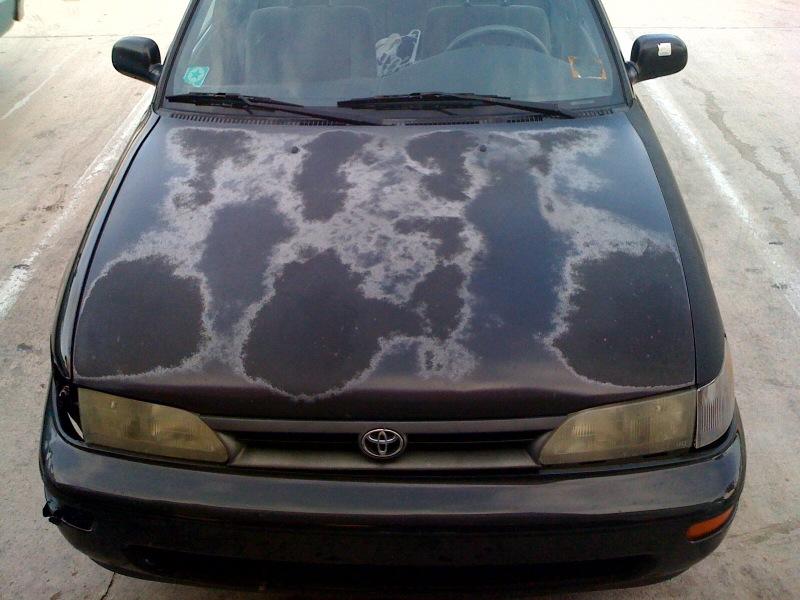
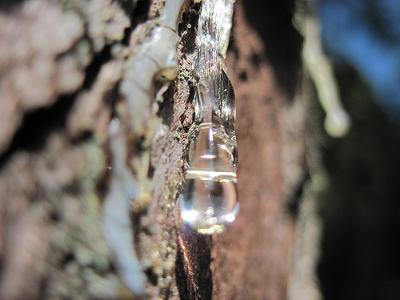
How To Remove Tree Sap From Car Hood

Q: I'm forced to park my car under a tree. In the early spring tree sap drops on my roof and hood. Commercial products claiming to remove these stains don't even come close to working. Cleaner waxes are simply a waste of time and effort. Any ideas?


A: Aside from moving the car? Try a car cover? If Bug & Tar remover doesn’t cut it, you’re not going to find anything more aggressive that won’t damage the paint.


Sunday, March 11, 2012

Why Does Water Collect Inside My Car's Headlights?

Q: My headlights are always collecting water inside. The dealer says he can replace them, but they’re very expensive, and he wouldn’t guarantee that the new headlights wouldn’t collect water also. I took out the headlamp assemblies and coated all of the seams between the clear lens and the back with bathtub caulk, and gooped up the rubber dingus that goes over the headlight wires with a lot more caulk, but it didn’t help a bit.


A: Let’s examine why there is water inside the lamp assemblies in the first place. As the outside temperature goes down and your nice warm headlamps cool off (either from being in the sun or just from being turned on), cooler, moister outside air trickles into the housings. The housings are vented top and bottom to allow for pressure differences, or they would quickly crack and fail. When the clear plastic lens is even a little bit cooler than the air inside the housing, droplets of moisture will condense on the inside of the lens. That’s normal. When the outside temperatures come back up in the morning, the moisture will evaporate.


Some vehicles don’t vent as well as others. Some drivers keep their cars parked in shady, damp areas or in cool, damp underground parking structures. And the moisture collects not as tiny droplets of mist but as what looks more like raindrops, and can even run down the glass and pool inside the housing.


Check to see if there’s a Technical Service Bulletin for your make and model of vehicle. If so, there may be a retrofit housing or an upgrade to the venting system. If not, you’re on your own. The first thing to try, if all you have is droplets, is to leave your headlights on while driving for a couple of hours, forcing the moisture off. If you have a spoonful or more splashing around, you may need to remove the housing and dry it out. Pour off the excess water, then add a few ounces of rubbing alcohol to the housing, sloshing it around and pouring it out. Repeat. Let the housing dry for a couple of hours in the sun or inside a nice warm house, preferably in some air that’s moving. Check that any vents aren’t plugged with spider eggs or mud. Install the housing and try to park facing south.


Saturday, March 10, 2012

My Car's Battery Goes Dead

Q: Our 1999 Ford Taurus, which resides under a cover, almost always has a dead battery after it sits for a month. I have had to replace it three times in the past seven years. I tried one of those solar panels plugged into the cigarette lighter by having a clear plastic window installed in the cover. The plastic housing on the charger actually melted when the heat outside got to 118 F and shorted, further draining the battery. Who knows what the temperature got to inside the car? Sure, I can disconnect and reconnect the battery, but for what that takes I can jump-start it with a portable jump-start battery device easier. Any advice to keep the battery from dying? The car’s parked in a lot across the street from the house, so running an extension cord to a trickle charger isn’t an option.


A: Melted the solar charger? Man, I bet you could bake cookies in there on a sunny day.


Letting any battery discharge that deeply will damage it immediately, which explains your high failure rate. And the heat will make the battery self-discharge even faster than normal.


My best suggestion: Get a battery disconnect switch, wired into the ground cable. This won’t prevent normal self-discharging, but it will eliminate any parasitic drains (like the radio presets and computer memory) that are killing the battery between uses. Then whenever you need the car, all you have to do is open the hood, turn the switch on, and start it up and drive away with clean hands. A decent battery should have enough juice left after a month to light the fires. In case the idle period is a little longer, keep an auxiliary starter box in the house on a charger. You can probably get enough charge into the nearly dead battery by plugging one of these gadgets into the cigarette lighter, also leaving you with clean hands.


A second suggestion would be to hard-mount the solar charger on the front license-plate bracket and leave it uncovered by your car cover. Park the car pointing southwest toward the afternoon sun to catch the most rays.


Would The Prius Get Better Gas Mileage If It Weighed Less? Part 2

Q: I read your answer concerning "Would The Prius Get Better Gas Mileage If It Weighed Less?". It was very interesting and I agree with your discussion but I'd like you to go a step further. The thing that is confusing about hybrids has to do with their efficiency. It seems to me that using an internal combustion engine to charge the batteries which power the electric motors that move the car would be less efficient that moving the same car with the internal combustion engine. I recall someone's theory having to do with "Conservation of Energy". Applying the same technologies that maximizes the efficiency of the gas engine as a "charger" could also make it a better "mover". Right?


A: You are correct, charging the batteries onboard with an IC engine and then powering the wheels with an electric motor is inherently less efficient than just gearing the IC engine to the wheels. That’s why most hybrids have some way of doing either or both.


Two compelling reasons to use batteries:


In a conventional hybrid, the batteries are on board to capture energy during regenerative braking, using this energy (normally wasted as heat in the brakes) to accelerate the car later.


In a plug-in hybrid, the batteries are recharged by the grid. A PHEV, if driven for short enough distances to not drain the batteries, may never consume gasoline.